- BiWire and Conventional Panels
- Introduction to Fire Alarm Panels
- About KYR Company
- What are Conventional Fire Alarm Panels?
- What are BiWire (Addressable) Panels?
- Comparison Between BiWire and Conventional Panels
- Choosing the Right Panel for Your Facility
- KYR Company Services for Panels
- Best Practices for Panel Installation
- Testing and Commissioning
- Conclusion
- References and Links
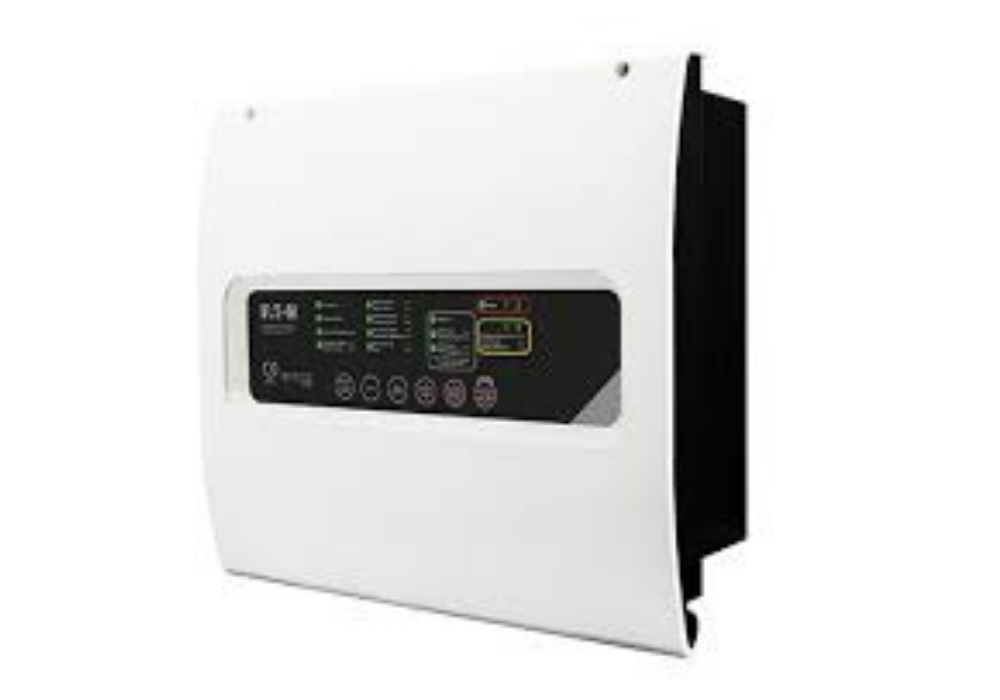
About KYR Company
KYR Company for Supply and Installation is a leading Egyptian company in low-current security systems, serving the sector for over 20 years. Their solutions include fire alarm panels, detectors, and notification devices for banks, hospitals, hotels, shopping centers, and offices.
What are Conventional Fire Alarm Panels?
Conventional panels are classic fire alarm systems where the building is divided into zones. Each zone connects multiple detectors and call points.
3.1 How They Work
-
Detectors are connected in a loop per zone.
-
When a detector is triggered, the panel identifies the zone but not the exact device.
-
The panel activates alarms based on zone alerts.
3.2 Advantages
-
Simple to install and operate
-
Cost-effective for small to medium buildings
-
Reliable with minimal configuration
3.3 Typical Applications
-
Small office buildings
-
Retail shops
-
Warehouses
-
Areas with limited complexity
What are BiWire (Addressable) Panels?
BiWire or Addressable panels provide advanced fire detection. Each detector has a unique address, giving precise information to the panel.
4.1 How They Work
-
Each detector communicates individually with the panel.
-
The panel identifies the exact device and location of a fire.
-
Allows integration with automatic suppression systems and advanced monitoring.
4.2 Advantages
-
Accurate identification of fire location
-
Reduces false alarms
-
Flexible system design and scalability
-
Integrates with modern building management systems
4.3 Typical Applications
-
Hospitals and healthcare facilities
-
Large commercial complexes
-
Hotels and resorts
-
High-rise office buildings
Comparison Between BiWire and Conventional Panels
| Feature | Conventional | BiWire (Addressable) |
|---|---|---|
| Device identification | Zone-based | Individual device |
| Complexity | Simple | Advanced |
| Cost | Lower | Higher |
| Scalability | Limited | High |
| Integration | Minimal | Advanced building systems |
Choosing the Right Panel for Your Facility
6.1 Consider Facility Size
-
Small/medium: Conventional panels
-
Large/complex: BiWire panels
6.2 Risk Assessment
-
High-risk areas like labs, hospitals, and hotels require BiWire panels for precision.
6.3 Budget Considerations
-
Conventional panels are cost-effective for small-scale projects
-
BiWire panels are an investment in safety, scalability, and compliance
KYR Company Services for Panels
7.1 Supply of Panels
KYR provides a wide range of Conventional and BiWire panels compatible with all detectors and notification devices.
7.2 Installation
Professional installation ensures:
-
Correct zoning and wiring
-
Integration with alarm systems and suppression equipment
-
Compliance with local safety codes
7.3 Maintenance and Support
-
Regular maintenance and testing
-
Software updates for addressable panels
-
Emergency technical support
Best Practices for Panel Installation
-
Plan zones or addressable loops carefully
-
Ensure proper wiring and backup power supply
-
Test alarms for all devices
-
Train staff on panel operation and response
Testing and Commissioning
-
Verify each detector triggers the correct zone or address
-
Test audible and visual alarms
-
Check integration with fire suppression and building management systems
Conclusion
KYR Company provides complete solutions for both Conventional and BiWire fire alarm panels. Choosing the right system depends on building size, risk, and required precision. KYR ensures supply, installation, and maintenance, delivering reliable fire safety solutions.
References and Links
🔗 KYR Company Official Website – https://www.kyrcompany.com/ar/
🔗 NFPA Fire Alarm Standards – https://www.nfpa.org/
🔗 ISO 7240 – Fire Detection Systems –https://www.iso.org/standard/72477.html